Oven
Gas, propane and electric, tested under load.
An oven drifting away from the dial ruins more than one dinner before anyone works out why. Gas and propane work stays with licensed technicians rather than being passed along.
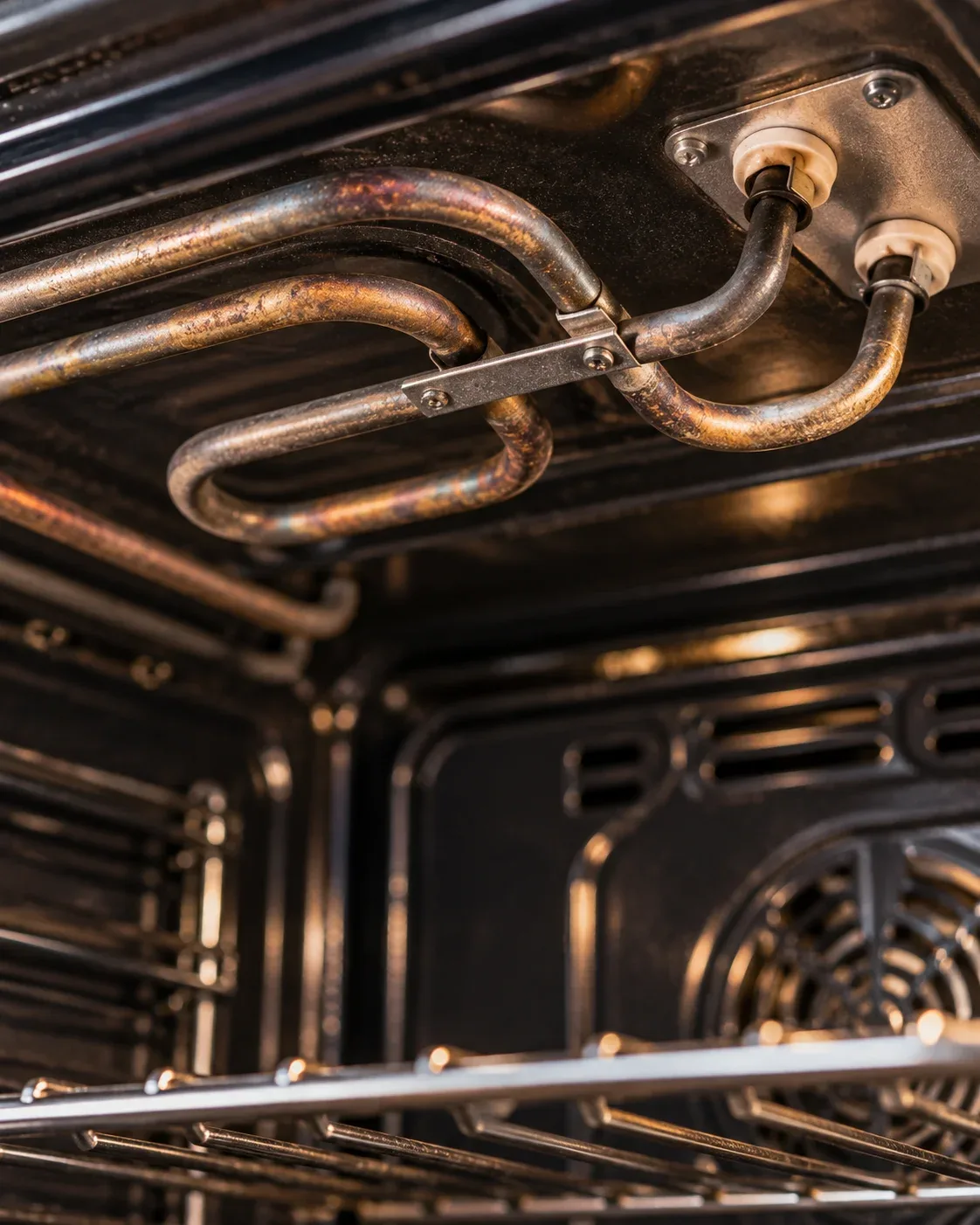
Same day where we can
Call before mid-afternoon and there is usually room
Ninety days of cover
On the component and the labour behind it
Open every day
Seven in the morning until eleven at night
What we handle
What goes wrong
Oven breakdowns repeat a small number of patterns, and the description you give on the call generally settles what gets loaded before leaving.
On gas and propane the igniter has weakened below the current needed to release the safety valve. Electric models lose continuity through the lower heating coil.
Calibration has wandered, either at the probe itself or in the thermostat reading it. The oven is convinced it is hotter than it actually is, and the results show it.
Nothing has failed outright, the component has simply faded well below its rated output. Waiting generally means it fails partway through something important.
Latch motor or its switch, stressed by a long cleaning cycle and now refusing to let go of the mechanism.
Two elements on two circuits. One working and the other not cuts the diagnosis in half before the back panel is even off.
The controller found something wrong in the sensing or switching side and withdrew heat rather than operate without a trustworthy reading.
Included as standard
All of it comes as part of the call rather than as add-ons. Testing an oven properly means checking the parts around the fault as well as the fault itself.
Booking takes a minute
Open every day, 7 a.m. to 11 p.m.
Codes on the display
Modern ovens lock the door and put a code on the display when the board finds something it cannot work around.
Control board or keypad, most often a button the board reads as permanently pressed.
Over-temperature detected. A sensor losing calibration most times, occasionally a relay welded shut.
Temperature sensor circuit open or shorted, so heating is disabled rather than run blind.
Door lock motor or latch switch. Nothing heats until the door position can be confirmed.
Touch panel or control communication fault, which often shows up right after a cleaning cycle.
NTC sensor or overheat protection intervening, with the appliance powering itself down.
The latch is either stuck or not confirming its position back to the board.
Shorted membrane behind the control panel, or a key stuck in the pressed position.
Door contact not registering as closed, which holds the programme indefinitely.
If the code turned up straight after a self-clean run, mention it when you ring. A long cleaning run stresses several components simultaneously, so the sequence we work through afterwards is different from a standard no-heat call.
Brands
From the job sheet
Three recent calls, set down the way they went rather than tidied up afterwards.
Rick T., Foxboro
Reported: Oven dead while the surface burners carried on working normally.
Found and done: Igniter was drawing well under what the safety valve needs to open. Replaced it, confirmed the valve was releasing properly, then ran a full preheat and pressure-checked the connection before leaving.
Joanne P., West Park Village
Reported: Everything scorching underneath while the tops stayed pale, with the household turning trays halfway through to compensate.
Found and done: Our probe read forty degrees below the setting. Temperature sensor had drifted well out of tolerance. Fitted a new one, recalibrated the board, and ran a test bake alongside our own thermometer to confirm.
Gerry M., East Hill
Reported: Oven refused to release the door once the self-clean finished, and would not heat afterwards.
Found and done: Latch motor had failed under the heat, which is common after a long clean. Replaced the motor and the switch together, since the switch had been reporting intermittently, and tested the lock through three full cycles.
Service area
Oven work runs seven days a week across the city and the villages around it, evenings included, which tends to be when a household discovers the thing will not heat.
Anywhere in Belleville counts. If your street is not on the list, call and we will confirm.
How it goes
Ring the office or send the form. We take the model number and a description of what the machine is doing, then agree a window that suits your day.
A licensed technician turns up inside the window with the parts most likely to be needed already on board, rather than discovering what is required and leaving again.
The appliance gets tested properly, not guessed at. You then hear plainly what has failed and one figure covering the whole repair, with no inspection fee tacked on afterwards.
Nothing is opened up until you say go ahead. If the cost does not make sense against the age of the machine, we will say so rather than quietly proceeding.
The machine runs through a full cycle while we are still in the house, the area gets tidied, and the ninety-day warranty date goes on your invoice.
Someone calls you back, usually inside the hour
Thank You!
Your message has been sent successfully. We'll get back to you shortly.
Your request has been sent. We'll call you back shortly to confirm your visit.